Investors

Emma & The Grid

A composable operating system for autonomous work

Submit the work. Receive the result. Keep the evidence.

Investor presentation

The full narrative, slide by slide.

The origin

The Grid began as a personal and professional question: how can Busoft be recreated as a software company for the AI era? The founder brought 25 years of software experience — multiple system architectures, generations of technologies, full cycles from idea to production, and domains from payroll to legal to education. The goal was to gather that working knowledge into a new kind of R&D team. Following the idea to its conclusion produced the Grid — and Busoft becomes the first R&D company on it. Emma is the new company built on this foundation.
The idea

Companies moved from physical servers to virtual machines to the cloud — each step separated the business from more of the machinery beneath it. The Grid is the next abstraction: a company defines its knowledge, services, policies, budgets and quality rules, while the Grid manages models, runtimes, scheduling, communication, recovery and observability.

LinkedIn is a place for professional identity. Shopify is a place to operate commerce. Salesforce is a place to configure customer operations. The Grid is a place to build, operate, discover, and compose service companies.

The problem

The most valuable professional knowledge is not on the internet. It lives inside companies — in how an expert recognizes an unusual case, which questions must be asked before acting, how years of mistakes became reliable procedure. AI needs that knowledge to do valuable work, and companies have every reason not to surrender it to platforms that would replace them.

At the same time, building AI alone is beyond most service companies: BCG found 74% of companies had not yet shown tangible value from AI; McKinsey found only 39% attribute any EBIT impact to it, mostly under 5%. Each company funds an isolated architecture and rebuilds the same infrastructure. A professional company should not need to become an AI infrastructure company before it can become AI-enabled.

The solution

One company, two connected workforces: the physical force — employees, managers, customer relationships — and the Grid force: company-owned Units performing authorized knowledge work under declared policies. The company controls which processes enter the Grid, which knowledge Units may access, what requires human approval, budgets and the right to stop.

Adoption starts small: one Grid worker, one bounded ticket type, one human supervisor. If one worker proves useful, add another. Workers become teams; teams become an operational Grid company. The first enterprise form is a private Grid installed in the customer's own environment, and the first practical loop is internal R&D — exactly the work the Grid is designed around.

The flow, end to end

Ticket in → the boundary validates and translates → a composed team of Units is activated with the customer's policy and budget → autonomous work runs through explicit capabilities → validation gates check the result → a durable, evidenced result returns — through to the invoice. Every step is observable, recoverable, and governed.

Why now

Companies are already moving knowledge into governed AI environments — Moderna deployed 750 custom GPTs in two months; Siemens' Industrial Copilot reaches 120,000 engineers. The direction is set. The Grid extends it from assistants to workers, teams, tickets, authority, durable evidence and company-level control. And when real companies join, they accelerate the platform's learning while it accelerates their transition — the ambition is ten-times-faster progress, honestly framed as a directional goal.

The roadmap, honestly

The next step is not a public marketplace. It is proving the physical foundations: a ticket can request a result, a Unit can perform governed work, evidence and cost are observable, failures recover, completion can be proven. Then a bounded private R&D Grid at first customers. Only later: publishing, reputation, composition, marketplace. Investors deserve the same engineering candor our customers get.

The ask

We are opening this round to partners who understand infrastructure timing. Full architecture brief, demo of the ticket-to-invoice flow, and terms — in person. Use the button below; the subject line is already set.

Current evidence

The R&D loop is running

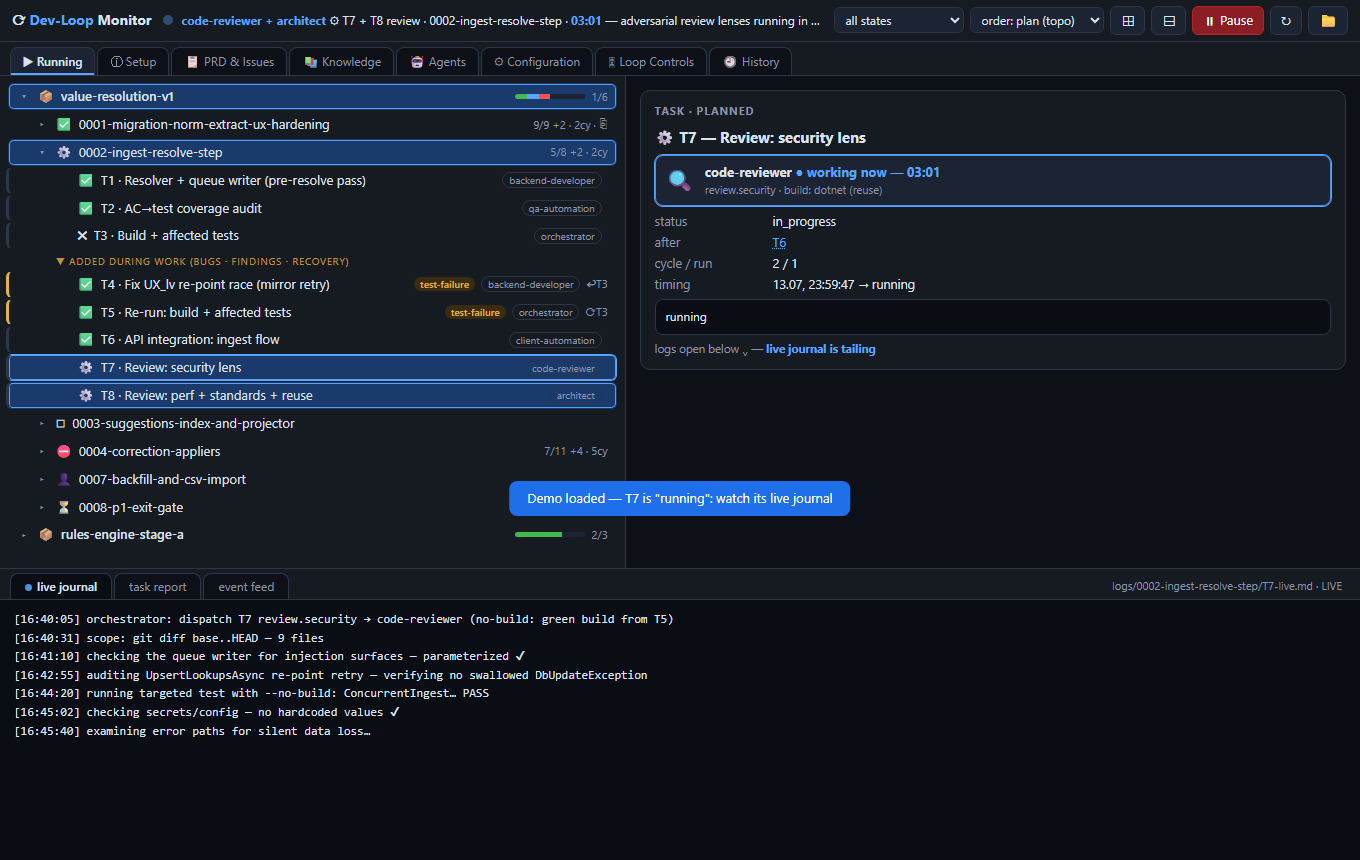
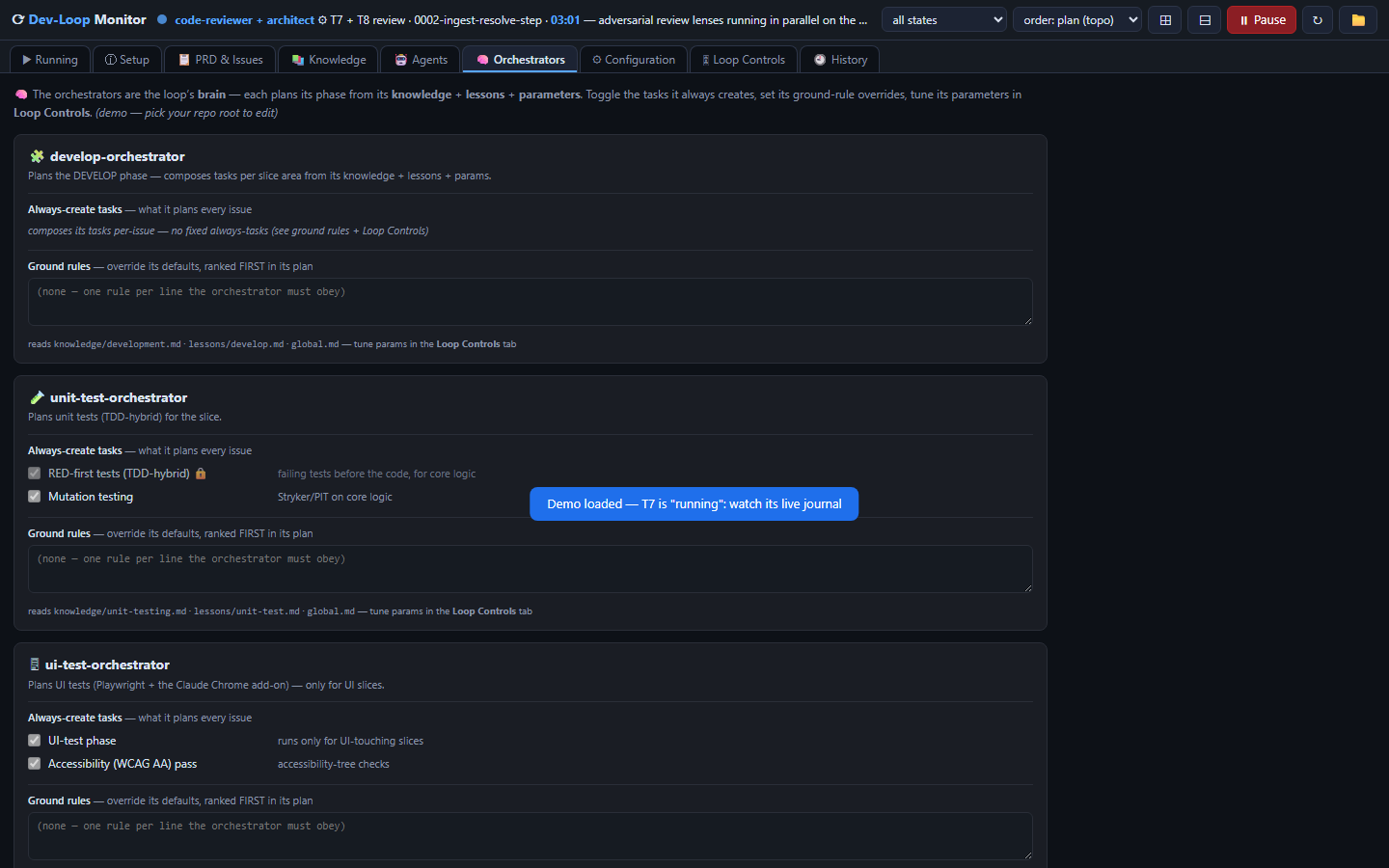
Real screens from the working system: a live loop run carrying real tasks, and the orchestrators that plan every cycle.

Live loop run
Live loop runA real epic mid-flight: tasks, specialist roles, adversarial review lenses, and a live journal of evidence.
The orchestrators
The orchestratorsThe loop's brain: planners with ground rules and built-in quality gates — tests first, mutation testing, accessibility.

From ticket to company

The Grid can assemble a company — not only complete a ticket

01 · RESEARCH Find the opportunity Market, problem, alternatives, evidence worth building on.
02 · PRODUCT Shape the company Idea, customer value, definition, commercial story.
03 · BUILD Build the product A composed R&D team creates and verifies the working product.
04 · LAUNCH Launch it live Packaged, installed, released with evidence.
05 · OPERATE An operating company Persistent teams respond to the live business in real time.

Get in touch

Investment — Emma & The Grid